
 AnnJil Chong
In-House Research
Therapeutic Efficacy of Lactobacillus sakei Probio65 in Canine Atopic Dermatitis

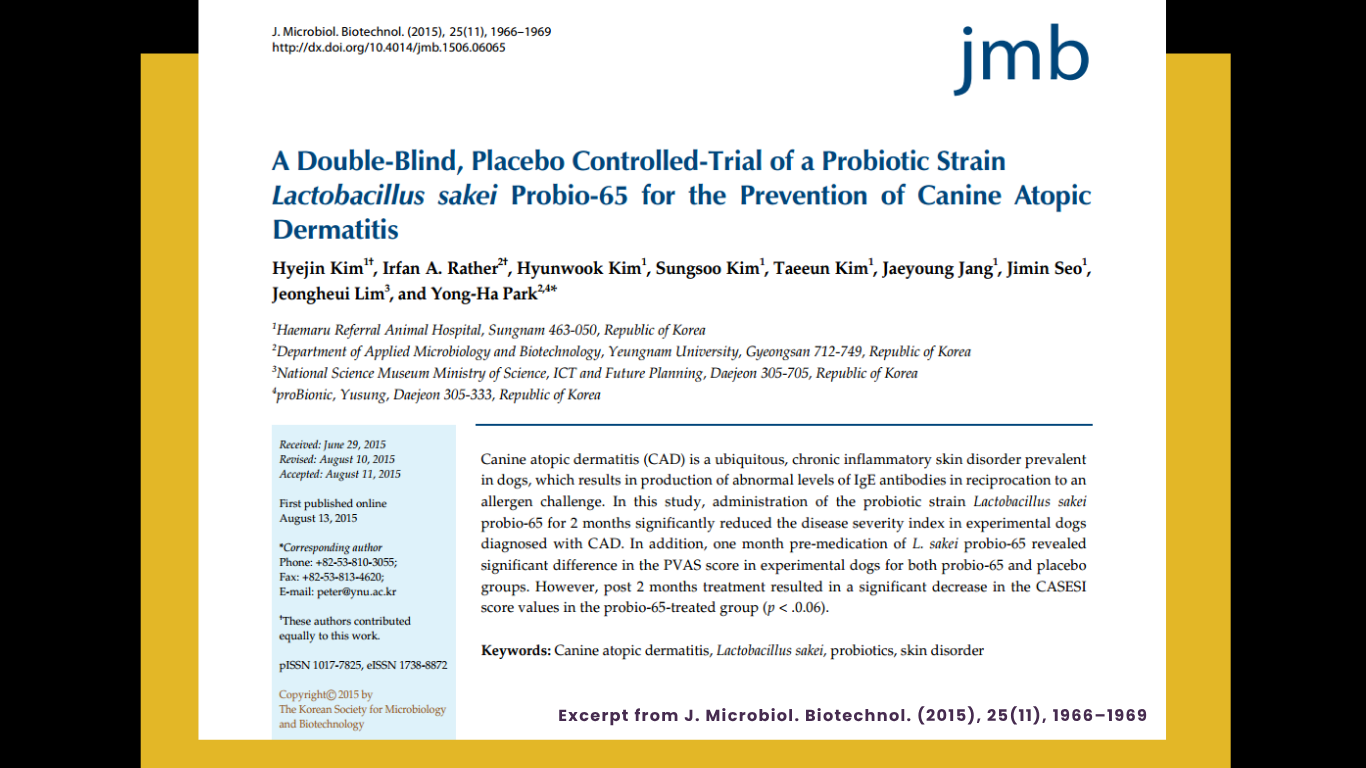
In this double-blind, placebo-controlled study, using probiotics was offered to dogs suffering from chronic atopic dermatitis (cAD), with the aim of gently supporting their recovery and comfort.
Researchers wanted to confirm the potential benefits of the probiotic strain Probio-65 in easing the symptoms of this difficult skin condition.
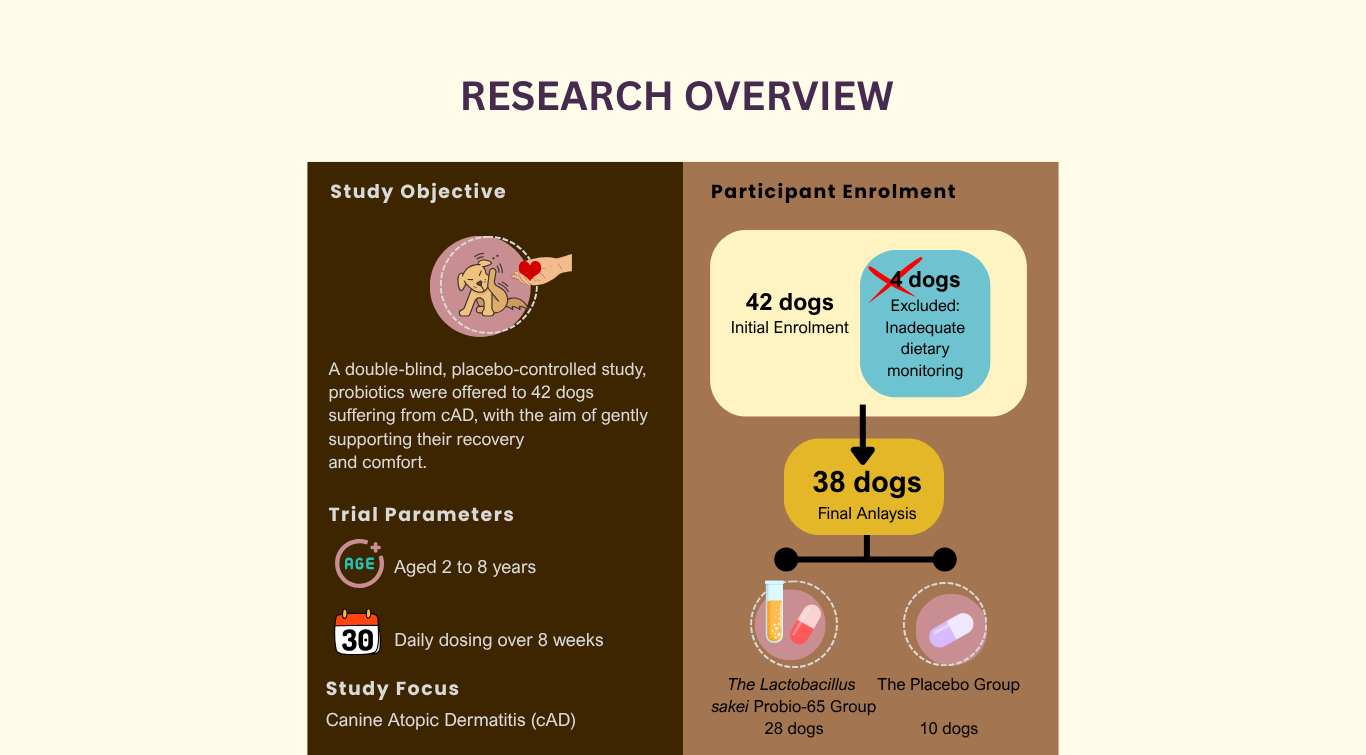
A total of 42 dogs, all diagnosed with cAD, were enrolled from Haemaru Referral Animal Hospital.
These dogs, aged between 2 and 8 years, were randomly assigned to receive either the probiotic strain Lactobacillus sakei Probio-65 or a placebo, given once daily over 8 weeks.
This study evaluated the effects of Lactobacillus sakei Probio-65 in dogs with clinically confirmed canine atopic dermatitis (cAD).
Initially, 42 dogs were enrolled, but 4 were excluded due to inadequate dietary monitoring. The final analysis included 28 dogs in the Lactobacillus sakei Probio-65 test group and 10 dogs in the placebo group.
CADESI scores
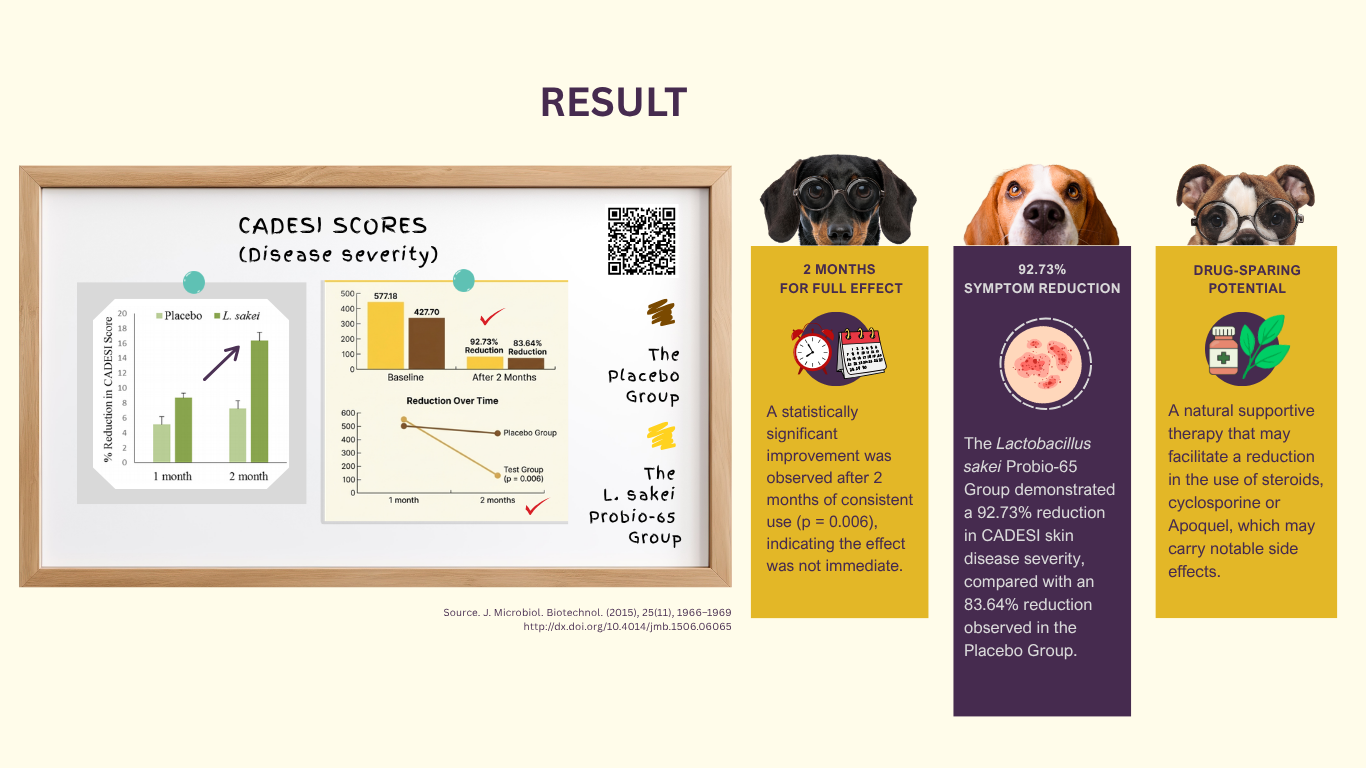
Disease severity was measured using CADESI scores. Before treatment, mean CADESI scores were 577.18 in the test group and 427.70 in the placebo group. After one month, CADESI scores fell to 8.7% of baseline in the test group and 5.14% in the placebo group (p = 0.06).
After two months, CADESI scores were 16.36% of baseline in the test group and 7.27% in the placebo group (p = 0.006). While there was no significant difference between pre-treatment and 1‑month CADESI values, the reduction from baseline to 2 months was significantly greater in the Lactobacillus sakei Probio-65 group.
What does it mean?
A. It Requires a Two-Month Commitment
At 1 month, there was no statistically significant difference (p = 0.06) between the probiotic and placebo groups. This indicates that the probiotic needs time to influence the gut microbiome and modulate the immune system, so it should not be expected to provide an immediate or overnight cure.
By 2 months, the difference between the two groups became highly significant (p = 0.006). This demonstrates that the true clinical benefits of the treatment are more clearly seen after two months of consistent daily use.
B. Substantial Reduction in Skin Symptoms
The CADESI score is used to assess skin lesions, redness, swelling, and fur loss.
The final data show:
- Dogs receiving the probiotic experienced a 92.73% reduction in skin disease severity compared to their baseline.
- Dogs in the placebo group showed an 83.64% reduction.
This indicates that the probiotic provided an additional, meaningful improvement in skin health beyond what was seen with placebo.
C. Potential “Drug-Sparing” Benefits
cAD is challenging to treat and often requires long-term use of costly medications such as steroids, cyclosporine, or Apoquel, which may carry notable side effects.
The study suggests that Lactobacillus sakei Probio-65 can serve as a highly effective, natural supportive therapy.
By helping manage flare-ups and improving coat and skin condition, it may allow for a reduction in the dose or frequency of heavier synthetic drugs, potentially improving both safety and cost-effectiveness in long-term cAD management.
PVAS scores
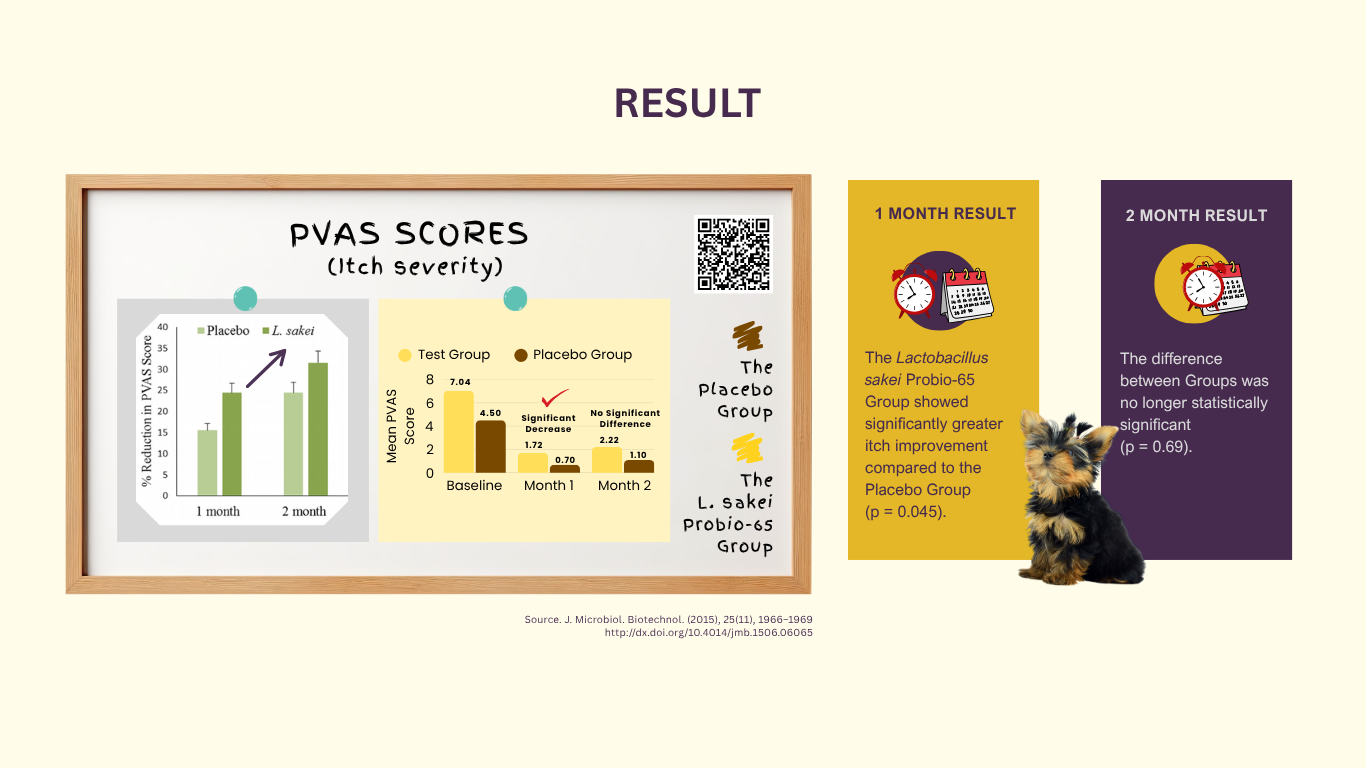
Pruritus (Itchiness) was assessed using PVAS scores. Mean pre-treatment PVAS scores were 7.04 in the test group and 4.50 in the placebo group. After one month, pruritus was significantly reduced in the Lactobacillus sakei Probio-65 group compared with placebo (p = 0.045), with scores decreasing to 24.43% of baseline in the test group and 15.55% in the placebo group. By two months, however, the difference between groups was no longer statistically significant, with PVAS scores at 31.53% of baseline in the test group and 24.44% in the placebo group (p = 0.069).
Interpret Month 1 Findings
- The probiotic group achieved a statistically significant improvement compared to the placebo (p = 0.045), which is (<0.05).
- The probiotic worked. It caused a massive drop of (5.32) points on the itch scale. Even though the placebo group reached a lower absolute score (0.70), the rate of improvement from baseline was significantly better in the probiotic group due to how severe their starting symptoms were.
B. Interpret Month 2 Findings
- The difference between the two groups was no longer statistically significant (p = 0.069), which is (>0.05).
- The unique advantage of the probiotic disappeared. By month two, symptoms slightly worsened in both groups. Mathematically, the gap in their remaining itch percentages (31.53%) vs (24.44%) became too small to prove the probiotic was performing any better than a dummy pill.
Improvements in atopic dermatitis-affected dog skin by oral administration of Lactobacillus sakei Probio-65:
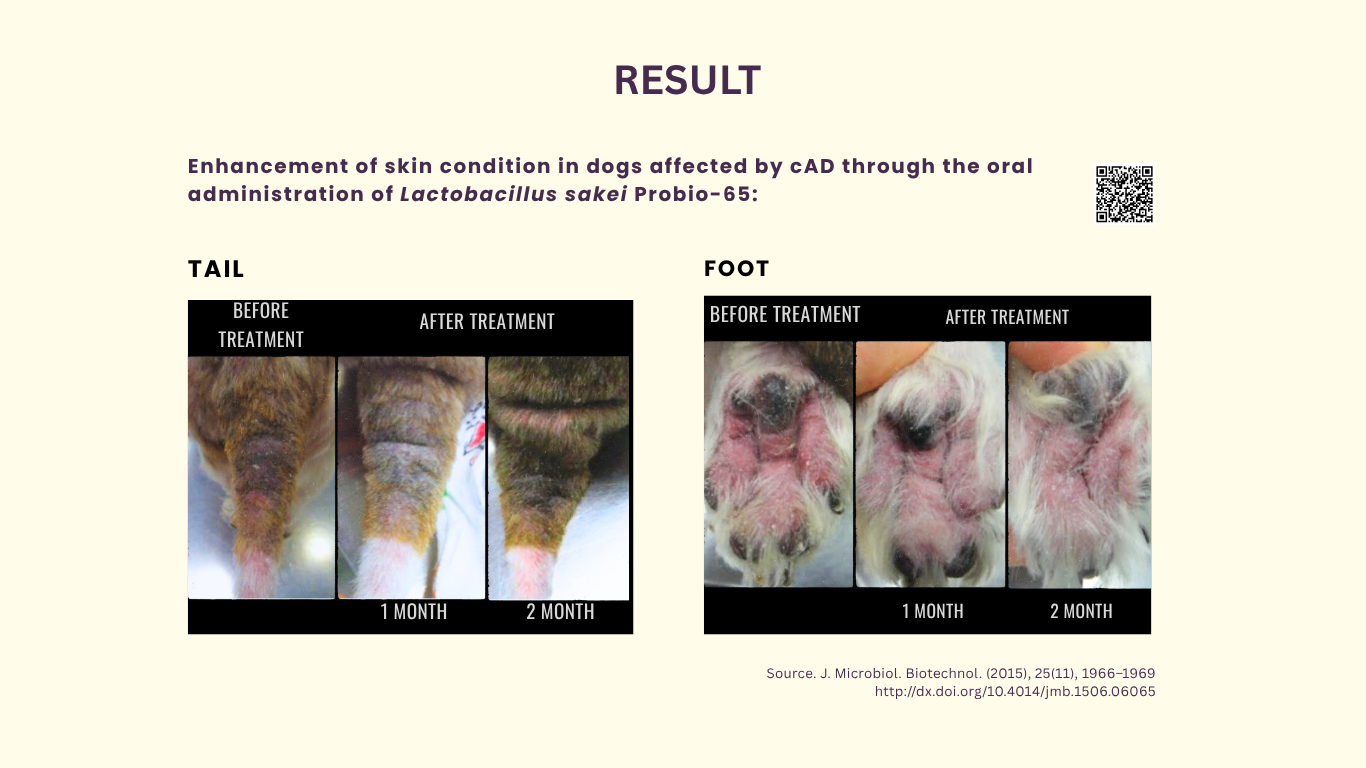
The results clearly show that probiotic therapy holds strong potential to become an integral part of multimodal treatment for canine atopic dermatitis, offering meaningful, long-term relief beyond what monotherapies alone can achieve.
By gently supporting the immune system and skin barrier from within, Lactobacillus sakei Probio-65 helps transform cAD from a relentless struggle into a condition that can be managed with greater comfort and stability.
In this convergence of compassionate care and scientific rigor, every improvement in a dog’s daily life becomes a powerful message: spoken by a dog’s health, heard by a scientist’s soul.
Author’s Note:
Your Fur Baby is Our Fur Baby!
Atopic dermatitis is a chronic, itchy skin condition that can be very uncomfortable for dogs and concerning for the fur parents who love them.
It affects around one in ten dogs and is linked to an overactive immune response to everyday environmental and/or food allergens, which can feel frustratingly hard to control.
Researchers are finding that a multimodal management strategy, including probiotics, which targets multiple points along the disease pathway, can achieve more comprehensive control.
This is Part IV: In-House Research—Therapeutic Efficacy of Lactobacillus sakei Probio65 in cAD, from the series titled Canine Atopic Dermatitis.
Read more: Part I | Part II | Part III