


Dear Kobe,
Over time, the most commonly used and effective treatments for managing Atopic Dermatitis for dogs (cAD) have included broad-acting therapies:


These treatments work by suppressing a range of inflammatory mediators in the canine body.
An alternative treatment is needed!
The research findings support the advancement of interventions as an alternative treatment option.
In particular, progress in medical technology is required to address exacerbating factors, including acute flare-ups—defined as a sudden and rapid increase in disease severity in a patient whose allergy was previously stable or well controlled—as well as the emergence of secondary infections.
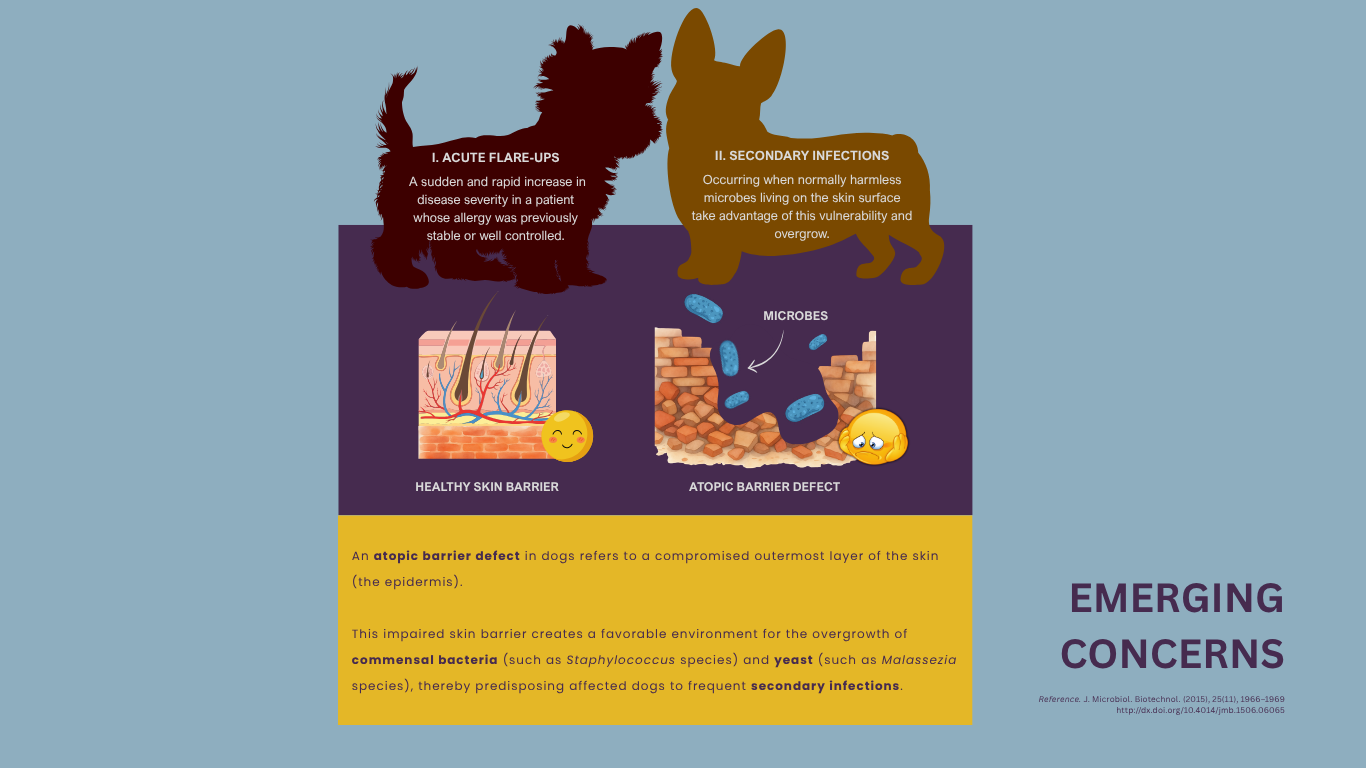
Because atopic skin has a compromised structural barrier, it lacks the usual mechanisms to defend against microbes.
As a result, secondary infections can occur when normally harmless microbes living on the skin surface take advantage of this vulnerability and overgrow.
Patients afflicted with cAD demonstrate an elevated susceptibility to staphylococcal
colonization.
A condition characterized by the presence of Staphylococcus bacteria that are actively acquiring nutrients and establishing a population without yet eliciting a full immune response or causing overt tissue damage (pyoderma).
Antibiotics have been employed as the primary first-line therapeutic intervention in such cases.

The Fall of Antibiotics?
The continued and often unregulated use of antibiotics, however, has contributed to a rising prevalence of antibiotic resistance in medicine.
This trend further complicates the development of effective treatment strategies for controlling cAD and associated secondary opportunistic infections.
In contrast to the traditional monotherapy approach, the updated recommendations of the American College of Veterinary Dermatology (ACVD) Task Force on cAD emphasize a multimodal management strategy, which targets multiple points along the disease pathway to achieve more comprehensive control.
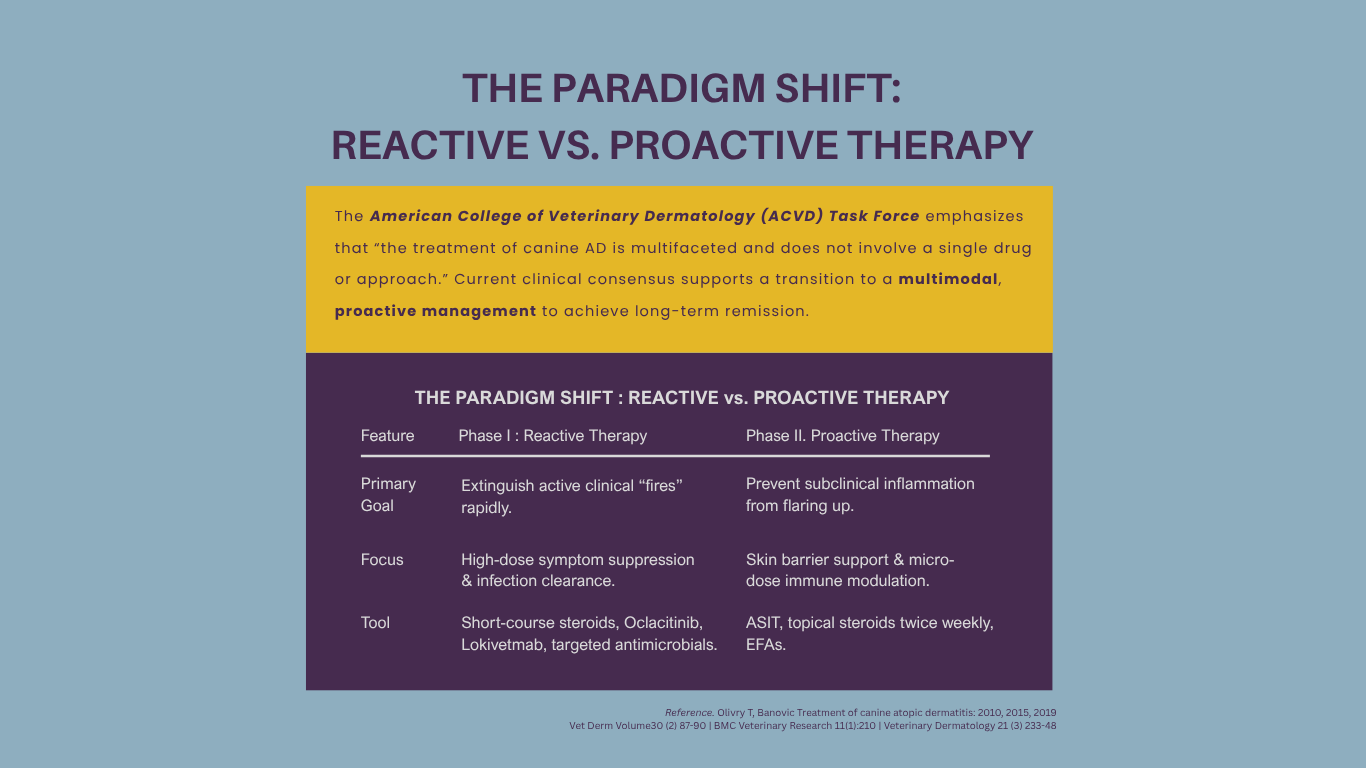
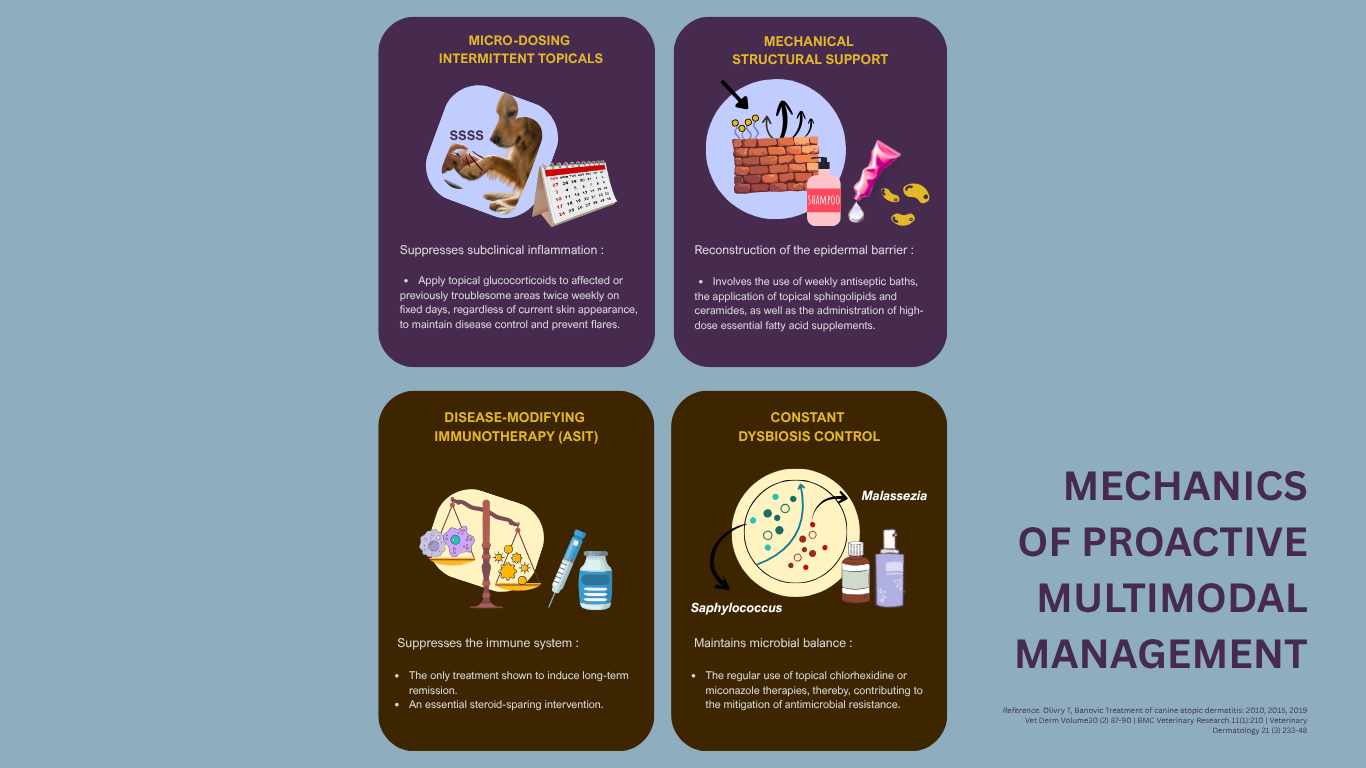
The following presents a comprehensive overview of the mechanics underlying proactive multimodal management:
Kobe, dinner time, buddy.
The epic tale is on pause—we’ll continue this heroic saga tomorrow.
For now, report immediately to your food bowl, you tiny, furry goblin.
Off you trot!
Author’s Note:
Your Fur Baby is Our Fur Baby!
Atopic dermatitis is a chronic, itchy skin condition that can be very uncomfortable for dogs and concerning for the fur parents who love them.
It affects around one in ten dogs and is linked to an overactive immune response to everyday environmental and/or food allergens, which can feel frustratingly hard to control.
Researchers are finding that a multimodal management strategy, including probiotics, which targets multiple points along the disease pathway, can achieve more comprehensive control.
This is Part III: Putting Out the Fire—Why One Hose Isn’t Enough for Canine Atopic Dermatitis, from the series titled Canine Atopic Dermatitis.
Read more: Part I | Part II | Part IV